
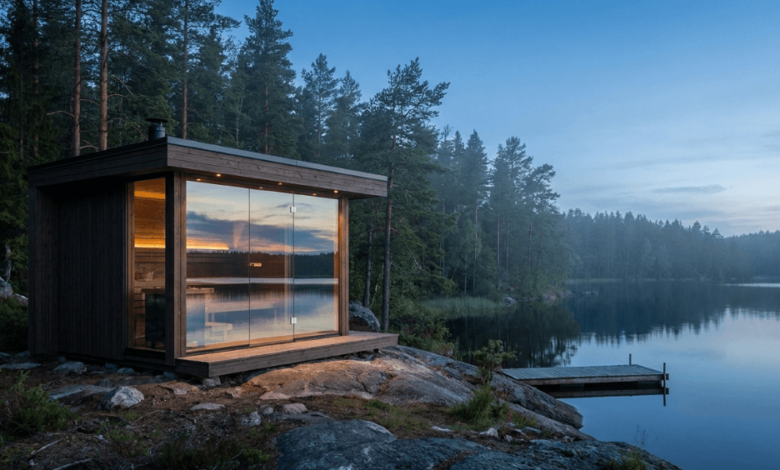
A first outdoor sauna, done on a realistic budget, typically costs $3,500 to $7,000 total once the cabin, delivery, foundation, and any electrical work are added together. The cabin itself is usually the smallest surprise in that number; site prep and wiring are where beginners most often underestimate cost. Understanding all four line items before shopping for a cabin prevents the most common first-time budgeting mistake.
Line Item One: The Cabin Itself
A basic two-person infrared or small traditional kit commonly runs $2,000 to $4,500 depending on wood species, wall construction, and heater type. Prefab and panelized kits are almost always the cheaper entry point compared with a fully custom build, since a factory-cut kit needs far less skilled labor on site. For a beginner, a smaller two- or three-person cabin is usually the smarter starting point over a larger family-size build, both because it costs less across every line item and because it is easier to gauge actual usage before committing to something bigger.
Line Item Two: Delivery and Site Prep
Delivery cost depends heavily on distance from the manufacturer or dealer and access to the install site, commonly $150 to $600 for a standard delivery. Site prep, a gravel bed, concrete pavers, or a simple pad, adds another $200 to $1,500 depending on the option chosen. This is the first place many first-time buyers get surprised, since online cabin pricing rarely includes what it takes to actually get a level, drained spot ready for the unit to sit on.
Line Item Three: Electrical Work, If Needed
A small infrared cabin under roughly 1.5 to 2 kW can often run on existing 120V household power, adding little to no electrical cost. A traditional heater in the 6 kW range needs a dedicated 240V circuit, which commonly runs $800 to $2,000 depending on distance from the main panel and whether a trench is required. This single line item is the biggest reason two seemingly similar cabin purchases can end up thousands of dollars apart in total project cost, and it is worth pricing before, not after, choosing a heater type.
Line Item Four: The First-Year Extras
Budget an additional $100 to $300 for a first year of accessories most beginners did not think to include upfront: a thermometer-hygrometer, a bucket and ladle, a basic bench cover or exterior sealant, and a few replacement heater rocks once the initial set breaks in. None of these are large individually, but skipping them from the initial budget is a common reason a project that looked affordable on paper ends up costing more once the cabin is actually in use.
Kit or Full Custom Build: Which Fits a Tight Budget?
A panelized or pre-built kit is almost always the more budget-friendly path for a first sauna, since it shifts labor from expensive on-site carpentry to factory assembly, and many kits are designed for a homeowner to complete final assembly with basic tools. A fully custom build, framed and finished on site by a contractor, gives more design flexibility but adds significant labor cost that a beginner rarely needs for a first cabin. Comparing kit sizes and finishes side by side before deciding how much cabin actually fits the budget is worth doing early, and buyers can look through SweatDecks.com to see how entry-level and mid-tier kits differ on price, size, and included features.
What Should a Beginner Never Cut to Save Money?
Two things: the electrical work for a traditional heater, and a level, well-drained foundation. Both are structural or safety related, not cosmetic, and shortcuts here tend to cost more to fix later than they saved at the time of purchase. Everything else, accessories, finish upgrades, a fancier bench layout, can reasonably wait for year two once the household knows how often the cabin actually gets used.
How Long Does a First Sauna Project Actually Take?
A panelized kit, once it arrives, typically goes from delivery to first use in a weekend or two if the foundation is already in place, since most of the assembly is bolting together factory-cut sections rather than building from raw lumber. The foundation itself, whether a simple gravel pad or a set of pavers, generally needs a few days to a week for excavation, leveling, and settling before the cabin goes on top. Electrical work adds the most unpredictable stretch of time to the schedule, since scheduling a licensed electrician and, in many areas, waiting on a permit inspection can add one to three weeks depending on local demand. A realistic first-timer’s timeline, from ordering the kit to a first session, runs four to eight weeks in most cases, longer if the electrical work involves trenching a longer distance from the main panel.
Is a Smaller Cabin the Smartest Budget Move?
For most first-time buyers, yes. A smaller footprint reduces cost across every line item at once: less material for the cabin itself, a smaller heater with a smaller electrical draw, a smaller foundation, and a lower monthly running cost. Sizing up later, once a household has a season or two of real use behind them, is a far more informed decision than guessing at capacity on day one. There is also a reasonable evidence base for treating regular use as worthwhile even at a modest scale: a Mayo Clinic Proceedings review found sauna bathing associated with a range of cardiovascular and general health benefits, and a systematic review in Evidence-Based Complementary and Alternative Medicine reported similar associations among regular users. These are association findings, not proof that sauna use alone changes outcomes, but they support starting small and consistent over stretching the initial budget for a larger cabin that may see less regular use.
Frequently Asked Questions
What is the total realistic cost to own a small outdoor sauna?
A basic two-person outdoor cabin, including delivery, a simple gravel foundation, and any needed electrical work, typically lands between $3,500 and $7,000 depending on heater type and site prep.
What is the single biggest cost a beginner underestimates?
Site preparation and electrical work. Buyers often budget carefully for the cabin itself but forget that a level foundation and, for a traditional heater, a dedicated circuit can add 20 to 40 percent to the total project.
Should a beginner buy a kit or hire a full install?
A pre-built or panelized kit is usually the more budget-friendly starting point, since it cuts labor cost significantly compared with a custom build, while still allowing a beginner to handle some assembly themselves.
What should a first-time buyer never skip to save money?
Proper electrical work for a traditional heater and a level, drained foundation. Both are structural and safety related, and cutting corners here usually costs more to fix later than it saved up front.
Is a smaller cabin a smart way to control the budget?
Yes. A smaller footprint reduces material cost, heater size, foundation size, and monthly running cost all at once, making it one of the most effective single decisions for controlling total project cost.
References
- Benefits and risks of sauna bathing, The American Journal of Medicine, 2001
- Effects of heat and cold on health, with special reference to Finnish sauna bathing, American Journal of Physiology, 2018
- Clinical Effects of Regular Dry Sauna Bathing: A Systematic Review, Evidence-Based Complementary and Alternative Medicine, 2018
- Cardiovascular and Other Health Benefits of Sauna Bathing: A Review of the Evidence, Mayo Clinic Proceedings, 2018

